Gauntlet Gallery
What is KAWS’s piece called “You Should Know I Know (First Edition)”?
Summary
You Should Know I Know is a KAWS work whose confrontational, confessional title places it among the artist's narratively named output rather than his branded character editions. Designated a First Edition, it suggests a primary or earliest realization within its line. The pointed phrasing carries a charged, interpersonal tension that aligns with the emotional undercurrents of KAWS's practice, and works of this kind typically pair his recognizable cartoon-derived forms, X-ed eyes, and flat pop palette with a more loaded register. Without verified production specifics, it is best understood as a significant, scarce work whose evocative title and first-edition status make it a notable entry in the artist's catalogue.
Why It Matters
KAWS's narratively titled works extend his pop vocabulary into pointed emotional and interpersonal territory, and a phrase like You Should Know I Know carries an accusatory intimacy that sets it apart from the cheerful surfaces of his branded figures. Works in this vein matter because they reveal the artist using appropriated forms to convey tension and unspoken feeling, the same emotional charge that underlies his wider appeal. The First Edition designation adds collector significance, marking the piece as a primary version within its series and therefore especially desirable to provenance-minded buyers. Such narratively driven works occupy the serious, gallery-facing side of KAWS's output, distinct from the widely available editioned characters, and they anchor the upper tier of collecting through scarcity and conceptual depth. They also document KAWS's evolution from a street artist subverting advertising into a contemporary artist capable of charged, ambiguous statements. For the market, first editions of distinctive titled works command a premium because they combine rarity, narrative force, and a clear place in the artist's development.
Collector Perspective
This work suits collectors who appreciate KAWS's more loaded, literary register and who value the First Edition status as a marker of primacy. Its confrontational title gives it strong conversational and curatorial presence on display, appealing to buyers who want a piece with narrative edge rather than a familiar mascot. In a collection it functions as a statement work, signaling engagement with the artist's emotional themes beyond the branded characters. Collectors often group such titled works to build a thematic set around KAWS's charged, interpersonal motifs, and the first-edition designation makes it a priority for those focused on provenance.
Historical Context
KAWS moved from 1990s graffiti and advertising interventions through vinyl toys into a mature practice of painting and sculpture exhibited internationally. Alongside the branded characters, he developed narratively titled works that foreground tension and unspoken feeling beneath his pop surfaces. You Should Know I Know belongs to this strand, with its First Edition status marking it as a primary version within its line. Lacking confirmed media or dates, it is best situated broadly within KAWS's established fine-art practice, where his appropriated forms served charged emotional ends rather than pure pop spectacle.
FAQ
What does the First Edition designation mean?
It indicates a primary or earliest version within the work's line, which collectors typically value over later releases.
Is this part of a character series?
No; its confrontational title places it among KAWS's narratively named works rather than the branded Companion or Chum series.
What is the work's tone?
The phrasing carries an accusatory, confessional intimacy, in keeping with the emotional undercurrents that run through KAWS's practice.
Does it feature KAWS's signature imagery?
Works in this register typically use his hallmark X-ed eyes, cartoon-derived forms, and flat pop palette while serving a more loaded theme.
Related Works
About the Artist
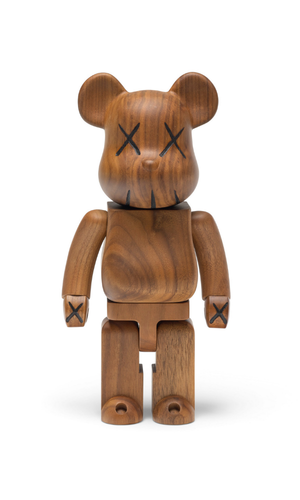
KAWS is the working name of Brian Donnelly (b. 1974, Jersey City). He began in the 1990s subverting bus-shelter and phone-booth advertisements, then built a singular visual language around the Companion — a Mickey-Mouse-descended figure with crossed-out X eyes — alongside Chum, BFF, Accomplice and a cast of appropriated cartoon characters. His practice spans paintings, screenprints, vinyl and bronze sculpture, and the monumental KAWS:Holiday installations shown in cities worldwide. His work is held by the Brooklyn Museum, the Modern Art Museum of Fort Worth, and major private collections, and he is among the most collected artists of his generation.