Gauntlet Gallery
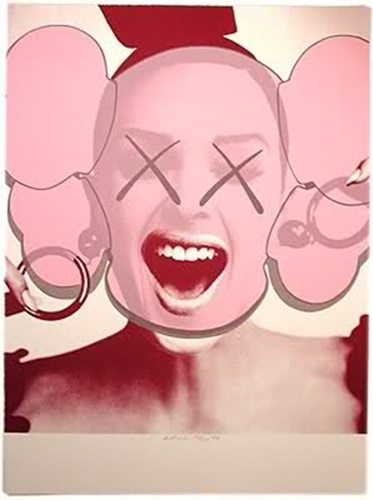
What is KAWS’s piece called “Supermodel 1”?
Summary
Supermodel 1 belongs to KAWS's early body of work in which he intervened directly into appropriated fashion and luxury advertising imagery, overlaying glossy magazine and bus-shelter ads with his own cartoon characters and X-eyed faces. Drawing on the high-fashion supermodel aesthetic of the era, the piece grafts KAWS's subversive vocabulary onto the seductive surface of commercial beauty photography, turning an instrument of consumer desire into a vehicle for his street-derived disruption. Rendered as a flat graphic with KAWS's clean linework and signature defacements, Supermodel 1 captures the moment his practice was rooted in hijacking advertising — the same impulse behind his celebrated subway-poster takeovers — and reframing its imagery with wit and a darker edge.
Why It Matters
Supermodel 1 is significant because it documents the originating gesture of KAWS's entire career: the appropriation and defacement of advertising. Before he became known for Companion vinyl toys and monumental sculpture, KAWS made his name by inserting himself into the visual language of consumer culture — luxury ads, fashion campaigns, and phone-booth posters — and adding his crossbones and X eyes to puncture their polished allure. Works tied to the supermodel and fashion-advertising theme show this confrontation with consumerism at its most direct, before the iconography was softened into beloved characters and merchandise. For collectors and historians, this places the work at the conceptual heart of KAWS's practice, illustrating how a graffiti writer turned the seductive surfaces of capitalism against themselves. It also connects to a lineage of artists who critiqued advertising and celebrity, situating KAWS within a broader Pop and appropriation tradition while retaining the raw, street-level energy that distinguishes his early output from his later, more commercial editions.
Collector Perspective
Supermodel 1 attracts collectors who prize KAWS's conceptual origins over his later character merchandise — those who want a piece that speaks to the ad-disruption and appropriation roots of his practice. As one half of a small numbered pairing with Supermodel 2, it appeals to set-minded buyers who like to acquire works as complete diptychs. Visually it offers something less ubiquitous than Companion, giving a collection range and a narrative about where KAWS came from. It hangs well in spaces that lean editorial or fashion-adjacent, and within a serious KAWS holding it serves as a contextual anchor, demonstrating the artist's confrontation with consumer imagery that underpins everything that followed.
Historical Context
Supermodel 1 sits in KAWS's foundational period, when his work centered on appropriating and altering advertising — the practice that grew directly out of his late-1990s subway and bus-shelter interventions. This was the phase before the Companion and Chum characters became standalone commercial properties, when KAWS was still in dialogue with the source imagery he defaced. Fashion and supermodel advertising were prime targets, mirroring his broader assault on the seductive surfaces of consumer culture. The work therefore marks the transition point on KAWS's arc from graffiti and ad-takeover artist toward the studio practice, toy production, and eventual fine-art and monumental stature, preserving the critical, appropriation-driven impulse at the source of his rise.
FAQ
What is the Supermodel theme about?
It reflects KAWS's appropriation of fashion and luxury advertising imagery, overlaying glossy supermodel photography with his own characters and X-eyed defacements.
Does it pair with another work?
Yes, it forms a numbered pairing with Supermodel 2, which collectors often acquire as a set.
How does this relate to KAWS's street work?
It extends his subway and bus-shelter ad-takeover practice, applying the same disruptive gesture to fashion advertising in editioned form.
Is this a rare KAWS subject?
Ad-appropriation works are less common in the market than his Companion editions, but we describe specifics cautiously without confirmed edition data.
Related Works
About the Artist
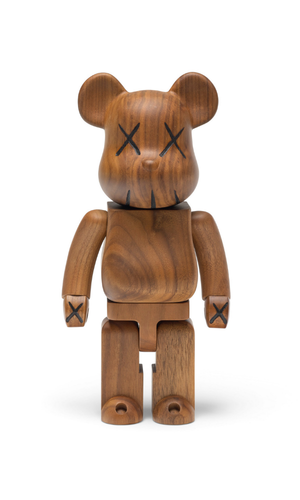
KAWS is the working name of Brian Donnelly (b. 1974, Jersey City). He began in the 1990s subverting bus-shelter and phone-booth advertisements, then built a singular visual language around the Companion — a Mickey-Mouse-descended figure with crossed-out X eyes — alongside Chum, BFF, Accomplice and a cast of appropriated cartoon characters. His practice spans paintings, screenprints, vinyl and bronze sculpture, and the monumental KAWS:Holiday installations shown in cities worldwide. His work is held by the Brooklyn Museum, the Modern Art Museum of Fort Worth, and major private collections, and he is among the most collected artists of his generation.