Gauntlet Gallery
What is KAWS’s piece called “Companion vs Astroboy (First Edition)”?
Summary
This screenprint pairs KAWS's signature Companion figure with the silhouette of Astro Boy, Osamu Tezuka's iconic manga and anime robot. KAWS layers his X-eyed, glove-handed Companion over the unmistakable Astro Boy form, collapsing his own invented mascot into a beloved piece of Japanese pop history. A 'First Edition' print in his graphic vocabulary, it reads as a flat, bold composition with KAWS's characteristic crisp outlines and limited palette. The work sits within his long practice of appropriating and reworking cartoon characters, treating mass-culture icons as raw material for a personal symbology of melancholy and play.
Why It Matters
KAWS built his fine-art reputation by hijacking the most recognizable figures in cartoon and advertising history, and Astro Boy is one of the most loaded of those references — a postwar symbol of Japanese optimism and technological hope. By fusing Companion with Astro Boy, KAWS connects his own brand-mascot to a global lineage of character design, underscoring how thoroughly his Companion has itself become a pop icon. The Japanese market has been central to KAWS's rise, from his early work with Bounty Hunter and OriginalFake in Tokyo, and an Astro Boy mashup speaks directly to that audience. For collectors, prints like this distill KAWS's core thesis: that mascots are a shared visual language he can remix. The 'versus' framing also nods to toy and fighting-game culture, situating the work at the intersection of street art, designer toys, and gallery prints that defines his crossover appeal.
Collector Perspective
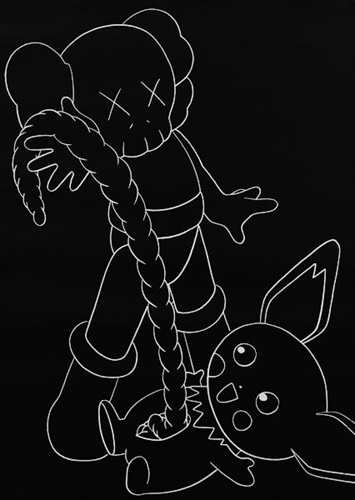
This appeals to collectors who prize KAWS's appropriation works and the crossover between his Companion universe and recognizable cartoon characters. It is a natural fit for buyers who already own Companion prints and want a piece with an extra layer of pop-culture reference, and it pairs especially well with the companion 'versus Pikachu' print as a set. As a bold, flat graphic it hangs cleanly and reads from across a room, making it a strong anchor or accent in a contemporary collection. Buyers attracted to KAWS's Japanese-market roots and toy-culture sensibility tend to gravitate here. Condition, framing, and authentication matter for resale, as with all KAWS editions.
Historical Context
The work belongs to KAWS's mature period, after his transition from subway interventions and graffiti to designer toys and gallery editions. Astro Boy and other manga characters connect to the deep relationship KAWS has had with Japan since the late 1990s and early 2000s, when collaborations with Tokyo streetwear and toy brands cemented his status there. Appropriating Astro Boy continues the strategy he began by reworking Mickey, the Michelin Man, the Simpsons, and SpongeBob — pulling familiar mascots into his X-eyed idiom. It reflects the phase in which Companion had itself matured into a recognizable brand, allowing KAWS to stage dialogues between his own creation and the icons that inspired it, rather than simply defacing existing imagery.
FAQ
Who is the Astro Boy character referenced in this print?
Astro Boy (Tetsuwan Atom) is Osamu Tezuka's classic manga and anime robot, a landmark of postwar Japanese pop culture that KAWS layers with his own Companion figure.
What is the Companion figure?
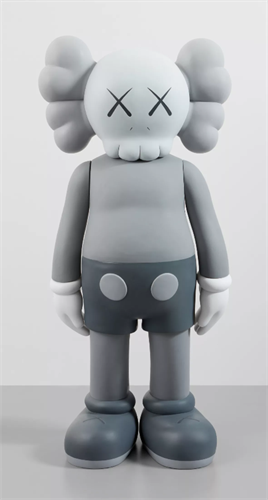
Companion is KAWS's signature character — a cartoon-inflected figure with X-ed-out eyes and gloved hands — that recurs across his prints, paintings, toys, and large-scale sculptures.
Is this an original screenprint?
It is presented as a limited screenprint edition in KAWS's flat graphic style. Confirm edition size, signature, and authentication documentation directly before purchase.
Why does KAWS use cartoon characters like Astro Boy?
Appropriating recognizable mascots is central to KAWS's practice; he remixes familiar icons into his own visual language, reflecting his roots in street art and designer-toy culture.
Related Works
About the Artist
KAWS is the working name of Brian Donnelly (b. 1974, Jersey City). He began in the 1990s subverting bus-shelter and phone-booth advertisements, then built a singular visual language around the Companion — a Mickey-Mouse-descended figure with crossed-out X eyes — alongside Chum, BFF, Accomplice and a cast of appropriated cartoon characters. His practice spans paintings, screenprints, vinyl and bronze sculpture, and the monumental KAWS:Holiday installations shown in cities worldwide. His work is held by the Brooklyn Museum, the Modern Art Museum of Fort Worth, and major private collections, and he is among the most collected artists of his generation.