Gauntlet Gallery
What is KAWS’s piece called “Pinocchio (Wood)”?
Summary
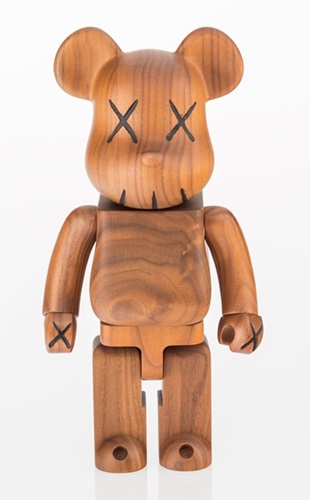
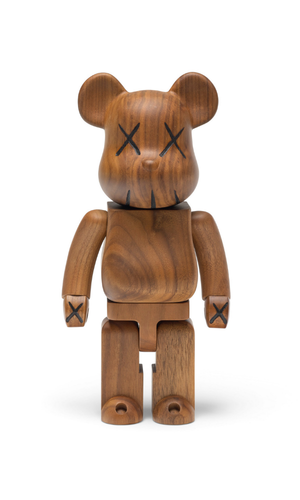
Pinocchio (Wood) is part of KAWS's collaboration with Japanese woodworking company Karimoku, which translated his characters into finely crafted wooden sculptures. Here KAWS appropriates the Disney Pinocchio character, reworking the familiar puppet through his own visual language, including the crossed-out X eyes, and rendering it in warm, grain-revealing carved wood rather than his usual vinyl or painted surfaces. The wood medium gives the figure a handcrafted, tactile quality that contrasts sharply with the slick finish of his mass-produced toys, positioning it as a more rarefied collectible object that bridges designer-toy culture and fine craftsmanship.
Why It Matters
The Karimoku wood collaborations occupy a special, more exclusive niche in KAWS's output, prized for their craftsmanship, smaller runs, and the warmth of natural material. Pinocchio also extends KAWS's long-running practice of cartoon appropriation, taking a globally recognized character, in this case a Disney icon, and subjecting it to his signature treatment. That act of appropriation, reworking beloved commercial cartoons through his own crossed-out vocabulary, is foundational to KAWS's identity and connects directly to his roots subverting advertising and pop imagery. The wood medium elevates the piece beyond standard vinyl, appealing to collectors who prize material quality and limited availability. Together, the appropriation of a famous character and the premium handcrafted execution make Pinocchio (Wood) a desirable crossover object that sits between KAWS's accessible toys and his fine-art and sculptural work, reflecting the breadth of formats through which he has built his market.
Collector Perspective
This piece appeals to KAWS collectors who specifically pursue the Karimoku wood editions and to those who value material craftsmanship and limited availability over open-edition accessibility. The carved wood finish makes it a refined display object, warmer and more sculptural than glossy vinyl, and it stands out on a shelf among standard figures. Within a collection, the wood Pinocchio signals a step up in commitment and budget, often acquired by collectors building depth in KAWS's collaborative and premium-format works. Its appropriation of a famous Disney character also gives it cross-appeal to collectors interested in KAWS's cartoon-appropriation theme. Buyers value the combination of recognizable subject, scarcity, and craft, and such wood editions tend to hold collector interest well.
Historical Context
KAWS built his career partly on appropriating commercial cartoon characters, from SpongeBob to The Simpsons to Disney icons, and Pinocchio continues that lineage. The Karimoku collaboration represents a distinct chapter in his object-making, where his forms were realized in premium carved wood, elevating the designer-toy format toward fine craft. This places Pinocchio (Wood) within his toy-and-collaboration practice while gesturing toward the more rarefied, limited end of his output. It reflects how KAWS leveraged partnerships and varied materials to expand both the artistic range and the collector market for his characters.
FAQ
What makes this Pinocchio different from a standard KAWS toy?
It was produced in carved wood through KAWS's collaboration with Karimoku, giving it a warm, handcrafted finish far removed from his usual glossy vinyl.
How does it relate to KAWS's broader practice?
It continues his long-running appropriation of famous cartoon characters, reworking the Disney Pinocchio through his own crossed-out visual language.
Why are the Karimoku wood pieces sought after?
They are prized for craftsmanship, natural material, and smaller production runs, making them a more rarefied niche in KAWS's output.
Who collects this piece?
Collectors focused on KAWS's premium collaborative and material-driven works, and those drawn to his cartoon-appropriation theme.
Related Works
About the Artist
KAWS is the working name of Brian Donnelly (b. 1974, Jersey City). He began in the 1990s subverting bus-shelter and phone-booth advertisements, then built a singular visual language around the Companion — a Mickey-Mouse-descended figure with crossed-out X eyes — alongside Chum, BFF, Accomplice and a cast of appropriated cartoon characters. His practice spans paintings, screenprints, vinyl and bronze sculpture, and the monumental KAWS:Holiday installations shown in cities worldwide. His work is held by the Brooklyn Museum, the Modern Art Museum of Fort Worth, and major private collections, and he is among the most collected artists of his generation.