Gauntlet Gallery
What is KAWS’s piece called “Kawsbob Black”?
Summary
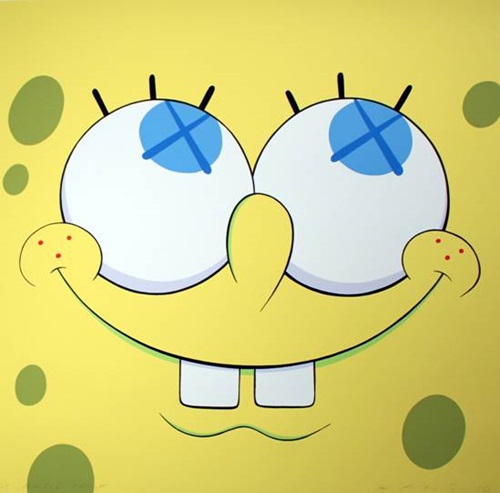
Kawsbob Black is part of KAWS's reinterpretation of SpongeBob SquarePants, transforming the iconic Nickelodeon character into a KAWS figure complete with his signature crossed-out X eyes and the artist's characteristic sculptural cartoon treatment. This black colorway presents the familiar square-bodied character in a darker, more graphic palette. As a KAWS take on SpongeBob, Kawsbob fuses the cheerful absurdity of the cartoon with KAWS's uncanny appropriation aesthetic, and it exists within a small colorway set, including red and yellow versions, that collectors pursue as a group.
Why It Matters
Kawsbob exemplifies KAWS's core strategy: seizing a beloved, instantly recognizable cartoon character and remaking it in his own visual language. SpongeBob, one of the most globally recognized animated figures, is an ideal vehicle for this appropriation, and the Kawsbob works show how KAWS destabilizes familiar imagery by replacing the character's expressive eyes with his crossed-out motif, a symbol of absence and mortality threaded throughout his oeuvre. The colorway approach, with distinct red, yellow, and black editions, mirrors how KAWS and the broader designer-art market drive collectibility through variation and scarcity. For collectors, the black version often reads as the most graphic and striking of the set, and the higher price point relative to many editions reflects its desirability. Kawsbob underscores why KAWS became a defining figure of the appropriation-driven, toy-influenced wing of contemporary art, where pop nostalgia, limited editions, and a recognizable artistic signature converge into objects of intense demand.
Collector Perspective
Kawsbob Black appeals to completist collectors assembling the full colorway set alongside the red and yellow editions, as well as SpongeBob and cartoon-crossover enthusiasts. Its bold, dark palette makes it a dramatic display piece that stands out among brighter KAWS works. Buyers value the recognizable subject and the way the set rewards thematic collecting. Within a KAWS collection it functions as a charismatic, character-driven highlight. Given the premium pricing, collectors should confirm edition details, authenticity, and condition carefully before purchase.
Historical Context
The Kawsbob works sit within KAWS's long practice of appropriating cartoon characters, a thread running from his subway-era ad interventions through his designer-toy era and into his fine-art career. By recasting SpongeBob, KAWS continued applying his established method to a new generation's defining cartoon, reinforcing his role as an artist who repeatedly mined mass media for source material. The colorway-based release strategy reflects the collector-driven dynamics KAWS helped popularize, blending art-world ambition with the scarcity mechanics of the designer-toy market.
FAQ
What character is Kawsbob based on?
It is KAWS's reinterpretation of SpongeBob SquarePants, recast with his signature crossed-out X eyes.
How does the black version differ from the others?
It is one of several colorways, alongside red and yellow editions, with the black presenting a darker, more graphic palette.
Should I collect the full set?
Many collectors pursue the red, yellow, and black versions together as a group, which enhances the thematic appeal.
Why is it priced higher than some KAWS editions?
The Kawsbob works are sought-after cartoon appropriations; pricing reflects demand, though buyers should verify edition and authenticity details.
Related Works

About the Artist
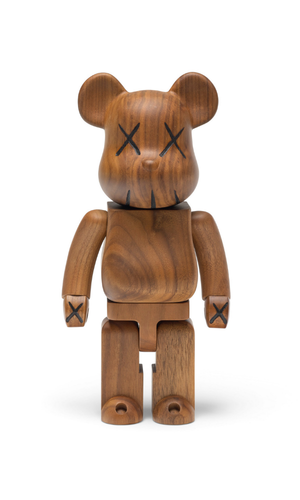
KAWS is the working name of Brian Donnelly (b. 1974, Jersey City). He began in the 1990s subverting bus-shelter and phone-booth advertisements, then built a singular visual language around the Companion — a Mickey-Mouse-descended figure with crossed-out X eyes — alongside Chum, BFF, Accomplice and a cast of appropriated cartoon characters. His practice spans paintings, screenprints, vinyl and bronze sculpture, and the monumental KAWS:Holiday installations shown in cities worldwide. His work is held by the Brooklyn Museum, the Modern Art Museum of Fort Worth, and major private collections, and he is among the most collected artists of his generation.