Gauntlet Gallery
What is KAWS’s piece called “Born To Bend (First Edition)”?
Summary
Born To Bend is a KAWS work issued as a first edition, a designation that points to its status as the initial, most sought-after run of the design. Rendered in the artist's flat-graphic idiom, it deploys his familiar pliable cartoon forms, curving limbs and crossed-out eyes that read as both playful and poignant. The title's emphasis on bending evokes the elastic, rubber-hose anatomy of vintage animation that KAWS frequently appropriates and reconfigures. As a first edition the work carries the cachet collectors attach to the earliest issue of any KAWS release, the version most closely associated with the original moment of the design and typically the most desirable in the secondary market.
Why It Matters
The 'First Edition' label is meaningful in the KAWS market because the artist and his collectors draw sharp distinctions between an inaugural release and any later reissues or open variants. First editions tend to be smaller, were the version available at the original release, and command a premium precisely because they represent the design at its source. Born To Bend matters as an example of how KAWS builds value through these editioning structures, where provenance and edition designation can affect price as much as the image itself. The work also showcases his ongoing dialogue with the elastic, malleable forms of early cartoon animation, a vocabulary he bends to his own melancholic, appropriation-driven ends. For collectors, owning the first edition is about authenticity to the original release and the confidence that comes with the most documented, most coveted version. This dynamic, in which collectors prize firsts and treat later runs as distinct, is a defining feature of how KAWS's editioned output is valued and traded.
Collector Perspective
Born To Bend (First Edition) appeals to collectors who specifically seek inaugural releases and are willing to pay a premium for the earliest, most desirable version of a KAWS design. The first-edition designation makes it attractive both as a display object and as a holding with clearer secondary-market standing than later variants. Within a collection it slots in as a piece chosen for its edition pedigree as much as its image, signaling a collector attentive to the distinctions KAWS's market draws between firsts and reissues. Authentication, original packaging where applicable, and confirmation of the first-edition status are central to its value and should be verified before purchase.
Historical Context
Born To Bend reflects KAWS's mature practice, in which carefully structured editions and first-run designations are an established part of how his work reaches collectors. It draws on his long-running engagement with the rubber-hose forms of early animation, a source he has reworked since emerging from graffiti and the toy era into broad fine-art recognition. The first-edition framing situates it within the collector culture KAWS has cultivated, where the earliest issue of a design is prized as the definitive version and later runs are treated as separate, lesser entries.
FAQ
What does 'First Edition' mean here?
It denotes the initial, original release of the Born To Bend design, the version KAWS collectors typically prize most and that usually commands a premium over later runs or reissues.
Why does first-edition status matter for KAWS?
KAWS's market draws sharp distinctions between inaugural releases and later variants; firsts are generally smaller, more documented, and more desirable, so the designation can affect value as much as the image.
What should a buyer verify?
Authentication, the first-edition designation, and original packaging where applicable. Specific edition size, date, and medium details should be confirmed against published documentation.
About the Artist
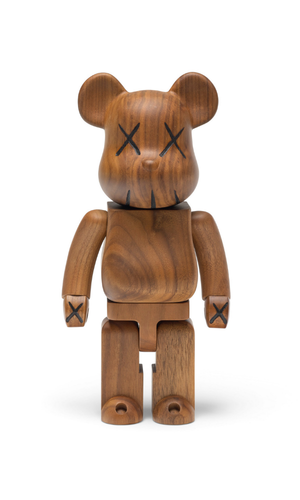
KAWS is the working name of Brian Donnelly (b. 1974, Jersey City). He began in the 1990s subverting bus-shelter and phone-booth advertisements, then built a singular visual language around the Companion — a Mickey-Mouse-descended figure with crossed-out X eyes — alongside Chum, BFF, Accomplice and a cast of appropriated cartoon characters. His practice spans paintings, screenprints, vinyl and bronze sculpture, and the monumental KAWS:Holiday installations shown in cities worldwide. His work is held by the Brooklyn Museum, the Modern Art Museum of Fort Worth, and major private collections, and he is among the most collected artists of his generation.