Gauntlet Gallery
What is KAWS’s piece called “Good Intentions”?
Summary
Good Intentions is a KAWS sculptural work depicting the BFF character in a tender, protective relationship with a small accompanying figure, a configuration that channels parent-and-child or caregiver themes. Cast in a substantial medium and standing as a presence-filled object, it shows the towering, furry-formed BFF with KAWS's hallmark X-ed-out eyes leaning toward or sheltering a diminutive companion. The title underscores the emotional register KAWS cultivates in these works, a bittersweet meditation on care, fallibility, and devotion. It belongs to the family-themed strand of his practice that pairs his pop-derived characters with genuine emotional weight, rendered at a scale and finish that reads as serious fine-art sculpture rather than accessible merchandise.
Why It Matters
Good Intentions exemplifies KAWS's emotional maturation, in which the BFF character carries themes of companionship, parenthood, and the imperfection of caring relationships. The work matters because it shows Donnelly using his instantly recognizable cartoon vocabulary to address sincere, even melancholic human subjects, elevating street-derived iconography into resonant figurative sculpture. As a higher-tier sculptural piece rather than a plush or open figure, it occupies a more prestigious place in the market and in serious collections. It reflects KAWS's broader trajectory from graffiti and toys toward museum-recognized fine art, and its title's gentle irony, good intentions that may fall short, lends the piece a reflective depth that rewards sustained attention. Works in this caregiving mode are among the most emotionally affecting in KAWS's catalogue and are valued accordingly.
Collector Perspective
Good Intentions attracts established KAWS collectors and contemporary-art buyers seeking a significant sculptural statement with emotional resonance rather than an entry-level object. Its scale and finish make it a centerpiece, suited to a gallery wall-facing pedestal, foyer, or living space where its protective figure grouping can anchor a room. Within a KAWS collection it elevates the holdings, signaling investment in the artist's fine-art tier and his family-themed BFF works. Buyers prioritize provenance, condition, and authentication, given the value level implied by such sculptural pieces. It pairs conceptually with other BFF and Companion works that explore companionship, and it commands the attention and care appropriate to a high-importance acquisition.
Historical Context
Good Intentions belongs to KAWS's contemporary, fine-art-forward period, when Donnelly had fully transitioned from graffiti and vinyl into internationally exhibited sculpture and painting. The BFF, introduced in the late 2010s, became a vehicle for his most tender, family-centered statements, and works exploring a large figure caring for a small one extend the Companion-and-child motifs he had developed earlier. This sculptural piece reflects the stage at which KAWS's emotional ambitions and his market stature aligned, producing serious objects that museums and major collectors pursue. It marks the distance traveled from his 1990s subway interventions to a practice capable of monumental and intimate sculpture alike.
FAQ
What does Good Intentions depict?
It depicts KAWS's BFF character in a caregiving relationship with a small companion figure, evoking parent-and-child and protective themes.
Is it a major work?
Yes, it reads as a higher-tier sculptural piece rather than accessible merchandise, occupying a serious place in KAWS's fine-art output.
What does the title suggest?
Good Intentions carries a gentle irony about care and fallibility, reinforcing the bittersweet emotional register of KAWS's family-themed works.
Who collects it?
It appeals to established KAWS collectors and contemporary-art buyers seeking a significant, emotionally resonant centerpiece.
About the Artist
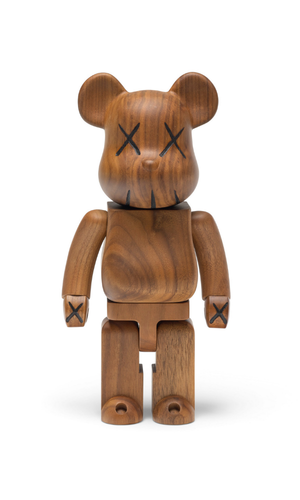
KAWS is the working name of Brian Donnelly (b. 1974, Jersey City). He began in the 1990s subverting bus-shelter and phone-booth advertisements, then built a singular visual language around the Companion — a Mickey-Mouse-descended figure with crossed-out X eyes — alongside Chum, BFF, Accomplice and a cast of appropriated cartoon characters. His practice spans paintings, screenprints, vinyl and bronze sculpture, and the monumental KAWS:Holiday installations shown in cities worldwide. His work is held by the Brooklyn Museum, the Modern Art Museum of Fort Worth, and major private collections, and he is among the most collected artists of his generation.